
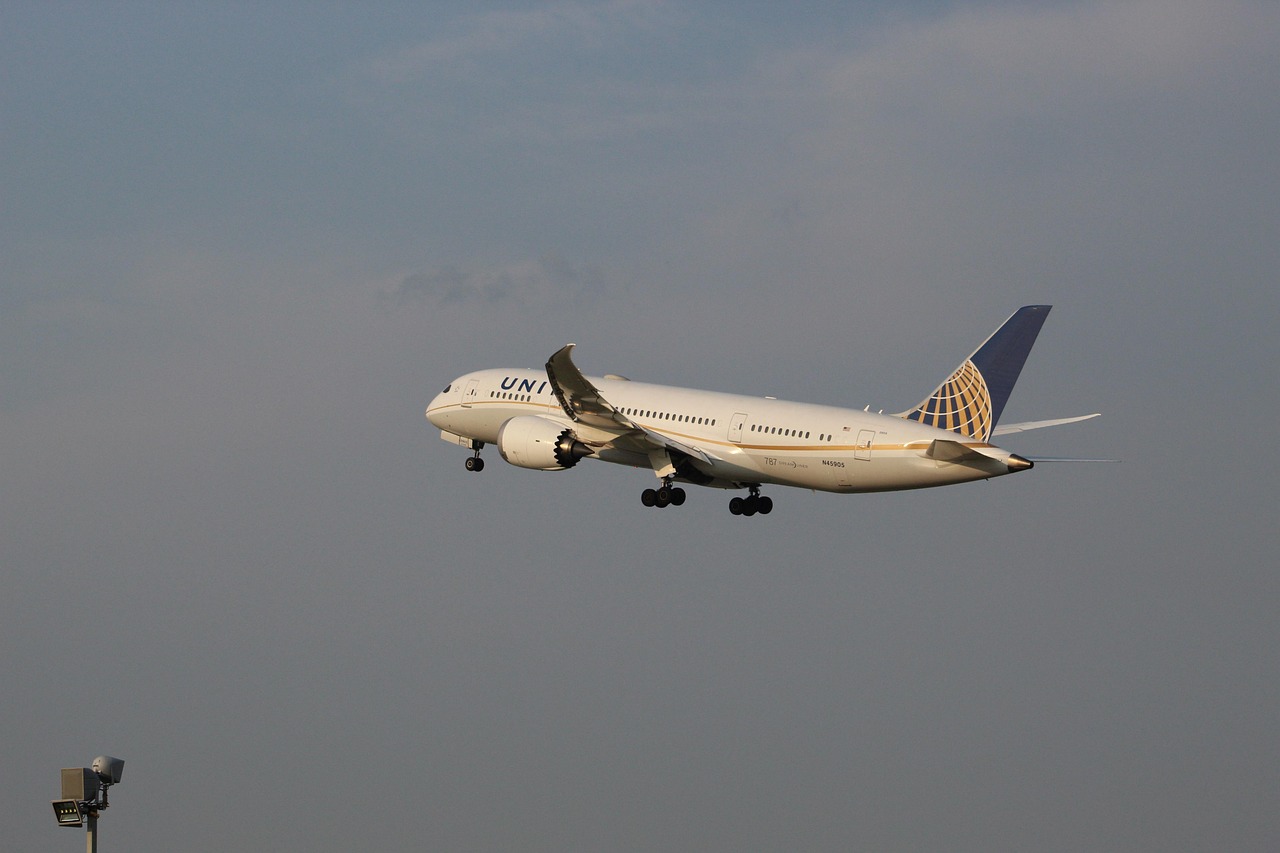
A commercial flight operated by United Airlines reportedly encountered a possible drone strike while approaching San Diego International Airport, drawing renewed attention to the risks posed by small unmanned aircraft operating near busy airspace. The aircraft involved, a Boeing 737-800, landed safely with no injuries reported and no visible damage found after a detailed inspection.
The incident occurred on a flight from San Francisco International Airport to San Diego on Wednesday morning. While authorities have not yet confirmed whether the object was a drone, the situation highlights a growing challenge for aviation safety: detecting and mitigating the risks of small, inexpensive, and difficult-to-track airborne objects operating in critical flight zones.
Safe Landing After Suspected Mid-Air Encounter
The flight, identified as United flight 1980, was nearing its destination shortly after 8:00 a.m. local time when the crew reported a possible drone encounter during the final stages of approach. The aircraft was carrying 48 passengers along with six crew members on what is typically a short intra-state journey.
Despite the unusual report, the crew did not declare an emergency. The aircraft landed safely just before 08:30, and passengers disembarked normally at the gate. In an official statement, United Airlines confirmed that its maintenance team conducted a thorough inspection of the aircraft and found no damage.
Air traffic control recordings reveal that the pilots observed a small object while flying on the base leg of the approach. When asked for more details, the crew described the object as extremely small, red, and shiny, noting that it was too small to determine its exact type or structure.
Why Drone Encounters Pose Unique Risks to Aircraft
One of the primary concerns surrounding such incidents is that drones differ significantly from natural hazards like birds. While bird strikes are relatively common and aircraft are engineered to withstand them, drones contain rigid components such as metal, dense plastics, electric motors, cameras, and lithium-ion batteries. These materials can create a different and potentially more dangerous impact profile.
The severity of a drone strike depends largely on its size and the point of impact. A minor collision with a reinforced section of the aircraft might result in little more than a precautionary inspection. However, a more significant impact involving critical components such as the windshield, engines, or control surfaces could pose serious risks, particularly during takeoff or landing when pilots have limited time and altitude to react.
Damage to cockpit glazing could impair visibility or even cause injury. Engine ingestion of drone components could lead to mechanical failures unlike those caused by bird strikes. Structural areas such as wings and leading edges are also vulnerable, and any damage to sensors or flight control systems could complicate aircraft handling. The presence of lithium-ion batteries introduces an additional concern, as they can ignite or cause thermal events upon impact.
Even in cases where no physical damage occurs, the mere presence of a drone in controlled airspace can distract pilots and disrupt communication with air traffic control during critical phases of flight.
Regulatory Limits and Increasing Drone Sightings
According to the Federal Aviation Administration, drone operations are generally restricted to altitudes below 400 feet in most areas. Flights near airports or in controlled airspace require specific authorization. Despite these regulations, the FAA reports receiving more than 100 drone sighting reports near airports each month.
Unauthorized drone activity in proximity to commercial aircraft is considered both dangerous and illegal. The increasing accessibility and affordability of drones have made enforcement more challenging, especially in densely populated or high-traffic areas.
Broader Security Concerns in Modern Aviation
Beyond accidental encounters, there is growing concern about the potential misuse of drone technology. In recent years, drones have been widely used in military conflicts in regions such as Ukraine and parts of the Middle East, demonstrating their effectiveness as low-cost but highly disruptive tools.
This evolution raises legitimate concerns about the possibility of drones being used intentionally to target commercial aircraft. While there is no indication that the San Diego incident was deliberate, the presence of an unidentified object at approximately 3,000 feet in a commercial flight path represents exactly the type of scenario aviation authorities aim to prevent.
Was It Really a Drone?
At this stage, it remains unclear whether the object encountered by the flight crew was in fact a drone. The limited visual description provided by the pilots underscores the difficulty of identifying small airborne objects at high speeds and distances.
Confirmed drone strikes involving commercial airline aircraft in the United States remain extremely rare. Most documented cases have involved helicopters rather than large passenger jets. If investigators determine that this was indeed a drone strike, it could represent one of the first confirmed incidents involving a commercial airliner.
The Federal Aviation Administration has launched an investigation, although the lack of physical evidence may complicate efforts to reach a definitive conclusion. Without visible damage or recovered debris, determining the exact nature of the object may prove challenging.
A Growing Challenge for Aviation Safety
Modern airline crews are extensively trained to handle a wide range of in-flight emergencies, including bird strikes, engine failures, and unstable approaches. However, the emergence of drones introduces a different category of risk. These devices are small, mobile, difficult to detect, and capable of operating in precisely the areas where commercial aircraft are most vulnerable.
The incident near San Diego serves as a reminder that aviation safety must continue to evolve alongside new technologies. As drone usage continues to expand globally, finding effective ways to manage their presence in shared airspace will remain a critical priority for regulators, airlines, and pilots alike.