
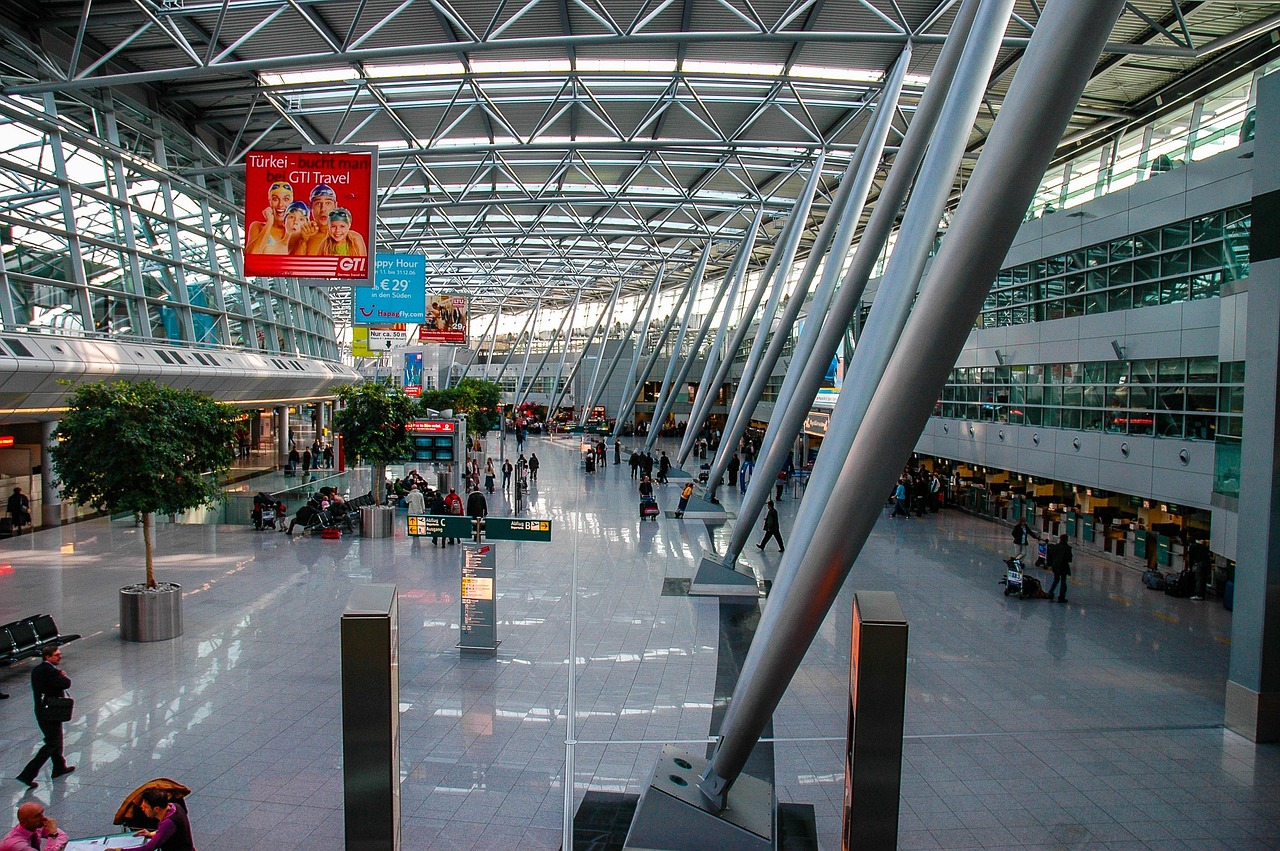
A large international airport in the United States is preparing for a significant transformation aimed at improving passenger movement between concourses. Since its opening in the mid-1990s, the airport has relied heavily on an underground automated train system to transport passengers between terminals and gates. While the system has generally been reliable, growing passenger demand has exposed its limitations, especially during peak travel periods and service disruptions.
To address these challenges, airport authorities are now planning a major infrastructure project that will introduce walkable pathways as an alternative way to move between concourses. The goal is to reduce dependency on a single transport system and improve overall resilience and passenger flow within the airport.
Walkable tunnels designed to improve passenger mobility
The planned project will convert portions of existing underground infrastructure into pedestrian walkways. These repurposed tunnels are expected to provide travelers with an additional option for moving between concourses without relying solely on the automated train system.
By introducing walkable connections, the airport aims to create a more flexible internal transportation network. This will help distribute passenger traffic more evenly and provide an alternative route when train operations are delayed or disrupted. The project represents a shift toward improving accessibility and reducing congestion in one of the busiest airport hubs in the country.
Multi-million dollar investment and long-term expansion plan
The infrastructure upgrade is estimated to cost between several hundred million dollars, with projections reaching up to approximately seven hundred million dollars. Construction is expected to begin in the coming years, as part of a broader long-term development strategy designed to prepare the airport for future passenger growth.
In addition to pedestrian tunnel development, the overall expansion plan includes further investment in modernizing the existing train system. A significant portion of funding is also allocated toward improving efficiency, reliability, and capacity, ensuring that the airport can accommodate future demand as passenger numbers continue to rise.
Addressing long-standing transportation challenges inside the airport
For decades, the airport has depended primarily on its automated train system to connect concourses. While there is a limited pedestrian bridge to one concourse, most passengers have no alternative but to rely on the train for transfers between major terminals.
When the train system experiences delays or outages, the airport is forced to rely on ground-level shuttle buses to transport passengers. These temporary solutions are often slow and inefficient, particularly during peak travel times, and can lead to missed connections and congestion throughout the terminal.
The introduction of walkable tunnels is intended to solve this long-standing issue by providing a reliable backup system that does not depend on mechanical transport alone. This added flexibility is expected to improve passenger experience and reduce bottlenecks during disruptions.
Preparing for future passenger growth and increased demand
The airport is preparing for a significant increase in annual passenger traffic in the coming years. Forecasts suggest that the facility may eventually handle around one hundred million travelers per year, placing additional pressure on existing transportation systems within the airport.
To manage this growth, airport planners are focusing on expanding capacity and improving internal mobility. The addition of pedestrian pathways is seen as a key part of this strategy, allowing passengers to move more freely and efficiently between gates without relying entirely on automated systems.
This forward-looking approach reflects a broader effort to modernize airport infrastructure and ensure that future demand can be met without compromising operational efficiency.
Impact on connecting flights and passenger experience
The reliance on a single train system has historically created challenges for passengers with tight connection times. Even short delays can have a cascading effect, leading to missed flights and overcrowded waiting areas.
Passengers traveling between certain concourses currently have limited alternatives, which increases dependency on train frequency and reliability. By introducing walkable routes, the airport aims to reduce this dependency and provide passengers with more control over their transfer times.
This improvement is expected to be particularly beneficial during peak hours, when passenger volume is highest and transportation systems are under the most strain. A more flexible internal network will help reduce stress on the system and improve overall travel reliability.
Historical infrastructure challenges and repurposed underground space
The airport’s underground structure was originally designed to support a more complex automated baggage system. However, that system was ultimately never fully implemented as planned, leaving behind extensive tunnel infrastructure beneath the terminal.
These unused or underutilized spaces are now being considered for repurposing into pedestrian walkways. This approach allows the airport to maximize existing infrastructure rather than building entirely new structures from scratch, helping to reduce both construction complexity and overall disruption.
By transforming these spaces into functional walkways, the airport is effectively adapting older design elements to meet modern travel demands.
A shift toward redundancy and improved reliability
One of the key goals of the project is to eliminate the risks associated with having a single point of failure in airport transportation. While the automated train system has operated reliably for many years, any disruption can have a significant impact on passenger flow and airport operations.
The introduction of walkable tunnels provides a redundant system that ensures movement between concourses can continue even if the primary transport system is slowed or temporarily unavailable. This shift toward redundancy reflects a broader trend in large infrastructure projects, where resilience and flexibility are becoming just as important as speed and efficiency.
Long-term benefits for airport operations and travelers
Once completed, the new pedestrian network is expected to significantly improve the overall passenger experience. Travelers will benefit from increased mobility options, reduced dependency on automated systems, and improved reliability during peak travel periods or service disruptions.
The project also supports long-term operational efficiency by reducing congestion and distributing passenger flow more evenly across the airport. As air travel continues to grow, these improvements will play a critical role in maintaining smooth and efficient airport operations for decades to come.